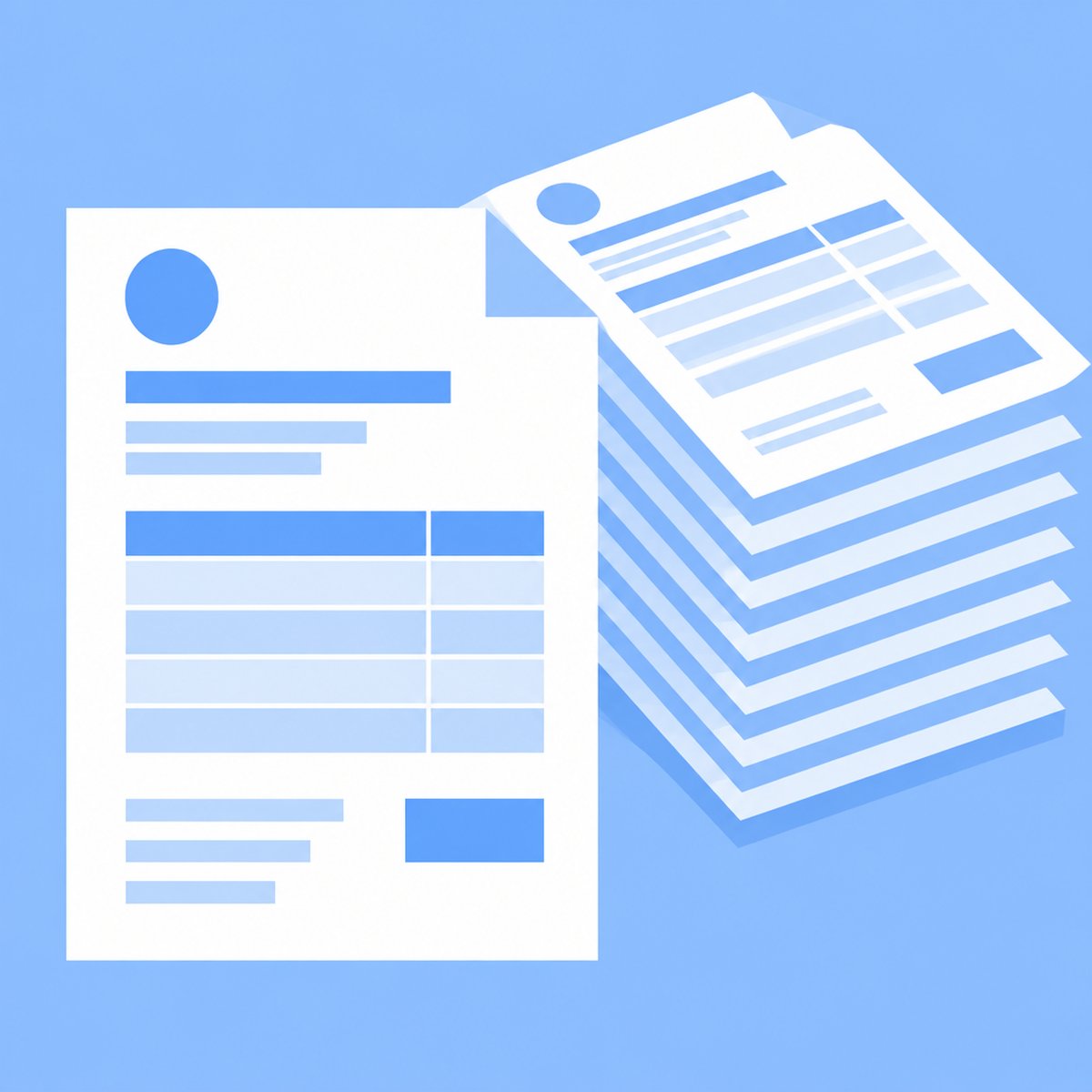
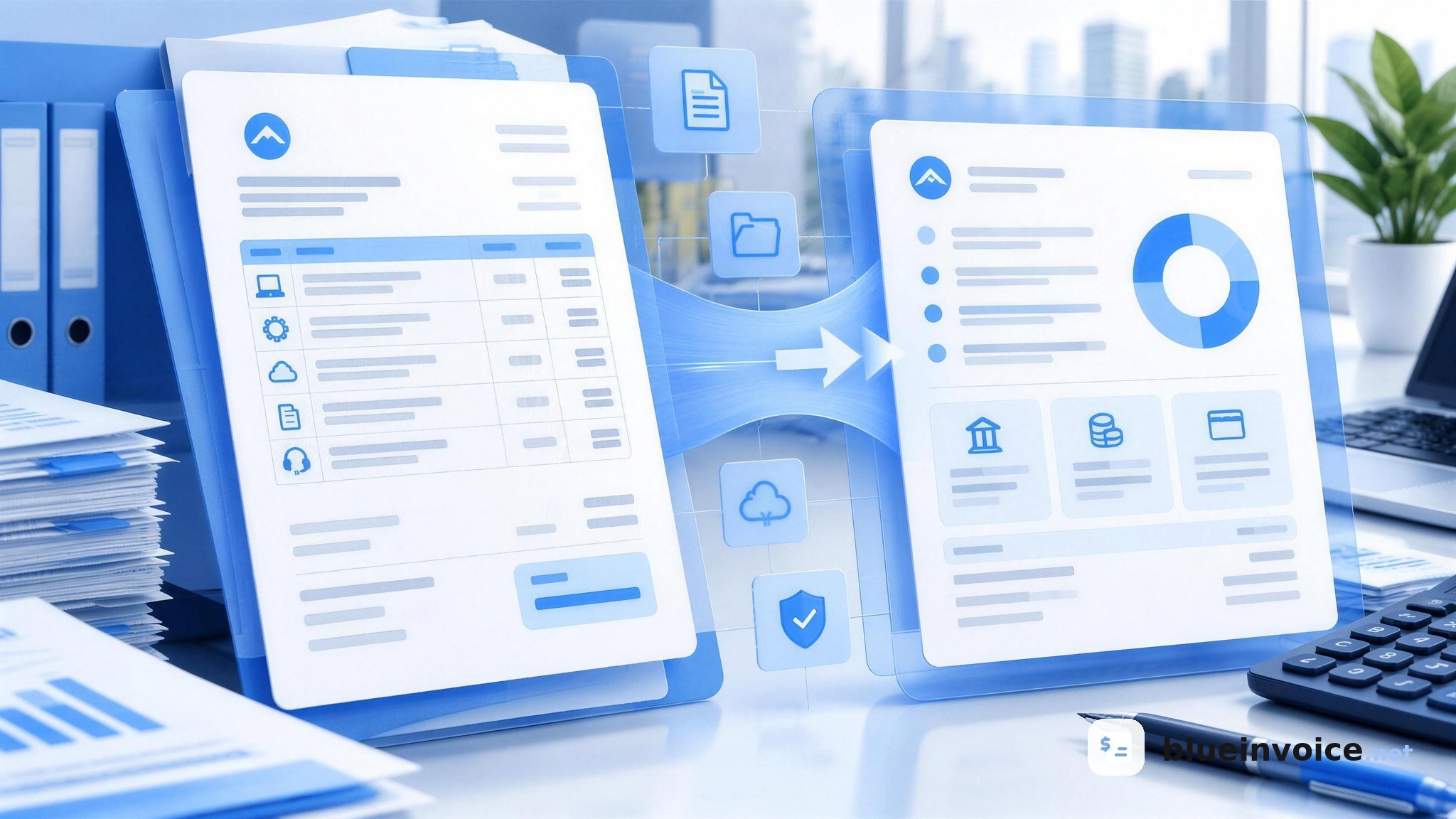
A statement of account is a summary document that lists every transaction between you and one customer over a set period: invoices issued, payments received, credits applied, and the outstanding balance still owed. It doesn't ask for payment on a single sale the way an invoice does. It shows the whole relationship at a glance, which is why most businesses send one at the end of each month rather than after every job.
Think of an invoice as the bill for one order, and a statement of account as the bank statement for that customer: no new charges, just a running tally of what happened and where things stand.
Content Table
What a statement of account actually is
A statement of account (sometimes called a customer statement or a monthly billing statement) is a periodic report of one customer's activity in your accounts receivable ledger. It is informational. It creates no new debt, carries no new tax point, and in most countries it is not a legal accounting document the way a tax invoice is.
Its job is reconciliation. You send it so the customer's payables team can compare their records against yours and spot the gaps: an invoice they never received, a payment you never applied, a credit note that was issued but never deducted.
What appears on a statement of account
There's no fixed legal format, but a useful statement almost always contains:
- Statement period (for example 1 to 31 March) and the statement date
- Your details and the customer's account name or customer number
- Opening balance carried over from the previous period
- Line-by-line transactions: each invoice number, date, and amount
- Payments received, with the date and the invoice they were applied to
- Credit notes, refunds, and write-offs that reduced the balance
- Closing outstanding balance
- Ageing breakdown: current, 1 to 30 days, 31 to 60 days, 61 to 90 days, 90+ days overdue
- Payment instructions and a contact for disputes
What it should not repeat is the detail of each sale. No line items, no per-item quantities, no tax breakdown per product. That belongs on the invoice, and if you want that detail to be readable, the work happens at the invoice stage when you write clear invoice line items.
Statement vs invoice: The real differences
| Feature | Invoice | Statement of account |
|---|---|---|
| Purpose | Requests payment for one specific sale | Summarises all activity and the balance owed |
| Trigger | A completed sale or delivered service | A calendar period ending (usually month-end) |
| Creates a debt? | Yes | No, it restates existing debts |
| Detail level | Line items, quantities, rates, tax | One line per invoice or payment |
| Payment terms | Has its own due date | Refers to the due dates already set |
| Tax document? | Often yes (a tax invoice supports VAT reclaim) | No |
| Typical volume | One per order or project milestone | One per customer per period |
| Can be paid directly? | Yes, against the invoice number | Sometimes, as a lump payment on account |
That last row matters more than people expect. When a customer pays the statement total instead of individual invoices, the money arrives as a lump sum you have to allocate yourself. That's exactly the situation described in what payment on account means on an invoice, and it's the number one source of messy receivables ledgers.
If the invoice side of the terminology still feels blurry, the distinction between an invoice and a bill in accounting is worth ten minutes, because "bill" and "statement" get used interchangeably in everyday speech even though they behave differently in your books.
Three common types of statements
1. Open item statement
Lists only unpaid and partly paid invoices. Nothing that's been settled appears. This is the cleanest option for chasing money, because every line on the page is something the customer still owes.
2. Balance forward statement
Shows an opening balance, then all activity in the period, then the closing balance. This is what your credit card issuer sends you. It's good for customers with high transaction volume, and it's the classic monthly billing statement format.
3. Aged receivables statement
An open item statement with the balance sorted into ageing buckets. Useful when a customer has drifted: seeing "£4,200 in the 90+ days column" lands harder than a single total. Ageing analysis sits at the heart of how accounts receivable is actually managed day to day.
When to send a statement (and when not to)
Statements earn their keep in specific situations:
- Recurring or high-volume customers. A client receiving 15 invoices a month needs one page that ties them together.
- Month-end collections. Many accounts payable departments only pay against a reconciled statement, not loose invoices.
- Disputes and missing invoices. A statement instantly reveals that invoice 1043 never reached the customer's inbox.
- Before escalation. Sending a statement with ageing buckets is a firm nudge that stops short of a formal demand letter.
Skip statements when a customer buys once, pays once, and the account closes at zero. Sending a statement showing a £0.00 balance just adds noise. Also avoid sending a statement instead of an invoice for a new charge: the customer's payables system will have nothing to match it against, and it may not be valid support for a tax deduction. Tax authorities expect the underlying invoices and receipts to be kept, as the IRS recordkeeping guidance makes clear (US example).
A worked example of a monthly billing statement
Say you invoice a design agency twice in March, they pay once, and you issue one credit note. Your statement for the period looks roughly like this:
| Date | Reference | Charge | Payment / credit | Balance |
|---|---|---|---|---|
| 1 Mar | Opening balance | 1,200.00 | ||
| 4 Mar | INV-1041 | 850.00 | 2,050.00 | |
| 12 Mar | Bank transfer | 1,200.00 | 850.00 | |
| 18 Mar | INV-1047 | 1,400.00 | 2,250.00 | |
| 26 Mar | CN-0012 (credit note) | 150.00 | 2,100.00 | |
| 31 Mar | Closing balance | 2,100.00 |
Four transactions, and the customer knows exactly where they stand. Notice the credit note sitting on the statement as a negative entry rather than as a corrected invoice. That's the usual treatment, and if you're unsure when to issue one, here's what a credit note is and when you need one.
Mistakes that make statements useless
- No invoice numbers. Without references, the customer's payables clerk can't match anything and your statement gets ignored.
- Unapplied payments. If a payment landed but was never allocated, the statement shows a balance the customer has already settled. That kills your credibility. Regular invoice reconciliation prevents it.
- Mixing currencies on one statement. Send a separate statement per currency, or the total means nothing.
- Treating it as an invoice. Adding brand new charges that never had their own invoice makes the statement unpayable in most approval workflows.
- Sending it to the wrong inbox. Statements belong with accounts payable, not the project manager who ordered the work. The split between accounts payable and accounts receivable explains which team handles what.
- No dispute deadline. A line like "please report any discrepancies within 10 days" turns a passive document into an action item.
Get those six right and a statement stops being admin and starts being a collection tool: one page, one balance, no excuses for delay.
Accurate statements start with clean invoices
A statement of account only restates your invoices, so every balance traces back to them. Create clear, complete invoices that customers can match against your month-end statement.
Generate an invoice →
Frequently Asked Questions
Yes, and many do. But paying the statement total sends one lump sum that you must allocate to individual invoices yourself. Always list invoice numbers on the statement so the customer can reference them, and record the receipt against specific invoices rather than leaving it unapplied.
Generally no. Tax authorities want the underlying tax invoice to support input tax recovery or an expense deduction. A statement is a summary with no tax point of its own, so keep the original invoices on file even after the statement balance is cleared.
Monthly is the standard rhythm, usually within the first three working days after month-end so it reaches payables before their payment run. Weekly statements make sense for very high-volume accounts, and ad hoc statements work well when a specific balance is under dispute.
Direction. You send a statement to your customer showing what they owe you. The customer sends remittance advice back to you, listing which invoices their payment covers. Remittance advice is what lets you allocate an incoming lump sum correctly instead of guessing.
It depends on the format. An open item statement shows only unpaid items, which is best for chasing money. A balance forward statement includes settled invoices and payments so the customer can audit the period. Pick one style per customer and stay consistent.
You can show accrued interest as a line on the statement, but the charge itself should be raised on its own invoice or debit note so it has a proper document reference. Most payables systems will not approve a fee that appears only on a summary statement.