BlueInvoice.net

Exigences de facturation électronique dans l'UE

As of November 2026, eight EU countries require e-invoicing for B2B sales at home, and e-invoicing requirements in Europe still differ by country. Check each one's status, key dates, and platform before it affects your business.

Qu'est-ce que la facturation électronique ?Statut par paysCalendrierQuestions

Ce que signifie vraiment la facturation électronique

An e-invoice, or electronic invoice, is a structured invoice: a data file, usually XML, that your client's accounting system reads field by field without anyone retyping it. E-invoicing is not emailing a PDF. A PDF is a picture of an invoice; an e-invoice is the invoice as data.

EU electronic invoicing follows one data model, the European standard EN 16931, so a file issued in Italy can be processed in Germany. Some national e-invoicing regulations go further and require every business invoice to pass through a government platform before it reaches the buyer.

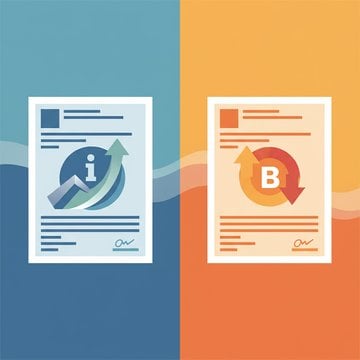
PDF : fait pour être lu par des humains

Facture électronique : Conçue pour être lue par un logiciel

Numéro de facture
2026-0142
BT-1
Date d'émission
2026-09-14
BT-2
N° de TVA du vendeur
NL526018159B01
BT-31
N° de TVA de l'acheteur
NL186091390B01
BT-48
Total TVA
315.00 EUR
BT-110
Montant dû
1,815.00 EUR
BT-115

Status of e-invoicing in EU countries

Italy, Romania, Germany, Greece, Belgium, Poland, France, and Croatia have live mandates; Spain, Slovakia, Estonia, Latvia, and Ireland have dates in 2027 or 2028, and the other countries require e-invoices only for public-sector sales or have partial rules. Filter by status to see each country's dates and platform.

Pays Status Key Dates Format / Platform
Italie Live / mandatory Jan 2019: all B2B and B2C invoices; Jan 2024: micro businesses included
Cross-border sales are reported through SdI too, since Jul 2022
FatturaPA via SdI clearance platform
Allemagne Live / mandatory Jan 2025: all must receive; Jan 2027: sending, turnover over €800k; Jan 2028: all sending
Domestic B2B only: cross-border sales are outside the mandate
XRechnung / ZUGFeRD, EN 16931, Peppol
Roumanie Live / mandatory Jan 2024: all B2B; Jan 2025: B2C added
Domestic transactions only: cross-border VAT reporting is handled separately
RO e-Factura platform
Grèce Live / mandatory Mar 2026: large businesses; Nov 2026: all others, with a transition period
Domestic B2B focus: cross-border scope not yet confirmed
myDATA or certified providers, Peppol-based
Belgique Live / mandatory Jan 2026: all B2B sending and receiving; 2028: e-reporting planned
Domestic B2B: cross-border sales are not in the mandate
Peppol, UBL 2.1
Pologne Live / mandatory Feb 2026: large taxpayers; Apr 2026: all other VAT-registered businesses
Invoices to foreign buyers are issued in KSeF too, then sent to the buyer outside it
KSeF clearance system
France Live / mandatory Sep 2026: all receive, large and mid-sized companies send; Sep 2027: small businesses send
Domestic B2B: cross-border sales covered by separate e-reporting obligations
Approved platforms (PA, formerly PDP); the public PPF is the directory and tax data hub
Croatie Live / mandatory Jan 2026: VAT-registered businesses; Jan 2027: businesses outside VAT start issuing
Domestic B2B, with invoice data reported to the tax authority
EN 16931 via approved intermediaries
Slovaquie Planned 2027+ Jan 2027: domestic B2B for all VAT payers; voluntary use in 2026
Domestic B2B: cross-border from Jul 2030 under ViDA
Certified providers; details not final
Espagne Planned 2027+ Oct 2027: turnover over €8M; Oct 2028: all others. Verifactu billing software rules: Jan 2027 for companies, Jul 2027 for others
Domestic B2B: cross-border sales not covered
Regulation RD 238/2026; Facturae, UBL, CII or EDIFACT
Estonie Planned 2027+ B2G since Jul 2019; Jul 2025: buyer can require e-invoices; 2027: B2B mandate planned, not yet law
Domestic B2B: cross-border via Peppol where applicable
Peppol, operator-based
Lettonie Planned 2027+ Jan 2025: B2G; Jan 2028: B2B and reporting (postponed from Jan 2026)
B2G domestic only: no cross-border mandate
State Revenue Service (VID), Peppol
Irlande Planned 2027+ Nov 2028: B2B e-invoicing starts with large companies (announced, not yet law)
No mandate yet: later phases extend it to more businesses
No mandate yet
Danemark B2G only / partial B2G mandatory via NemHandel; no B2B e-invoicing mandate
No cross-border mandate: domestic B2G only
NemHandel, Peppol
Hongrie B2G only / partial Invoice data reported to the tax authority (NAV) in real time
Reporting covers cross-border B2B invoices too, but there is no exchange mandate
RTIR real-time reporting, no B2B exchange mandate
Finlande B2G only / partial B2G mandatory; since 2020 a business buyer can require e-invoices; sending otherwise voluntary
No cross-border mandate: domestic B2G only
Peppol, no B2B sending mandate
Suède B2G only / partial B2G since 2008-2019; B2B voluntary
No cross-border mandate: domestic B2G only
Peppol, B2B voluntary
Autriche B2G only / partial B2G central government mandatory; B2B voluntary
No cross-border mandate: domestic B2G only
Peppol, no B2B mandate confirmed
Pays-Bas B2G only / partial B2G via Peppol since 2019; B2B voluntary
No cross-border mandate: domestic B2G only
Peppol, no B2B mandate yet
Portugal B2G only / partial No B2B mandate; SAF-T active
No cross-border e-invoicing mandate: SAF-T applies domestically
Certified billing software required
République tchèque B2G only / partial No B2B mandate confirmed; B2G in progress
No cross-border mandate: under discussion
Under discussion
Luxembourg B2G only / partial B2G progressing; B2B: no mandate
No cross-border mandate: domestic B2G only
Peppol expected
Bulgarie B2G only / partial B2G discussions ongoing; no B2B timeline
No cross-border mandate: under review
Under review
Status as of November 2026 · Sources: European Commission (ViDA), Peppol
EU-wide (ViDA): cross-border B2B e-invoicing and digital reporting become mandatory on 1 July 2030, and national systems are expected to align with the EU model by January 2035.

Guide des statuts et des abréviations

Ce que signifie chaque statut et les sigles utilisés dans le tableau.

Status guide
Live / mandatory
E-invoicing already required by law for domestic B2B transactions.
Planned 2027+
Mandate announced or in law, starting in 2027 or later.
B2G only / partial
Mandate covers only invoices sent to government entities, or invoice data is reported without an e-invoice. No B2B e-invoice requirement yet.
Abbreviations
B2B Business to Business
B2G Business to Government
B2C Business to Consumer
ViDA VAT in the Digital Age (EU regulation)
Peppol Pan-European Public Procurement OnLine
UBL Universal Business Language (XML invoice format)
EN 16931 European standard for electronic invoicing
SAF-T Standard Audit File for Tax
RTIR Real-Time Invoice Reporting (Hungary)

L'obligation de facturation électronique dans l'UE, année par année

Mandatory B2B e-invoicing in Europe started with Italy in 2019 and becomes an EU-wide rule for cross-border B2B sales on 1 July 2030.

  1. 2019Italy made B2B e-invoicing mandatory through SdI on 1 January, the first EU country to do so.
  2. 2024Romania required e-Factura for business invoices.
  3. 2025Germany: from 1 January every business had to be able to receive e-invoices. On 11 March the EU adopted ViDA, the package that sets the common rules.
  4. 2026E-invoicing in Belgium and Croatia became mandatory on 1 January. Poland followed on 1 February for large taxpayers and 1 April for the rest, Greece on 2 March for large businesses, and e-invoicing in France started on 1 September.
  5. 2027-2028Germany phases in mandatory sending, France extends sending to small businesses, e-invoicing in Spain starts with large companies, and Slovakia and Latvia follow.
  6. 2030À partir du 1er juillet, les factures électroniques structurées deviennent obligatoires pour les ventes B2B transfrontalières au sein de l'UE, avec une déclaration quasi en temps réel aux administrations fiscales.
  7. 2035Date cible pour aligner les systèmes nationaux sur le modèle de l'UE.

Les normes de facturation électronique qui sous-tendent chaque format et plateforme

Each country with a mandate names its own e-invoice format and platform, and most formats follow the European standard EN 16931.

FatturaPA / SdI
E-invoicing in Italy uses FatturaPA, an XML format cleared through the Sistema di Interscambio before it reaches the buyer. SdI checks it, gives it an ID and passes it on; cross-border sales are reported through it too.
XRechnung / ZUGFeRD
E-invoicing in Germany uses two formats, both built on EN 16931: XRechnung is pure XML, ZUGFeRD is a PDF with the XML embedded inside it.
e-Factura
Le système national de la Roumanie, géré par l'administration fiscale ANAF. Les factures XML y sont validées.
KSeF
E-invoicing in Poland runs through KSeF, the Krajowy System e-Faktur, a clearance system: invoices are submitted as XML, validated and forwarded.
PA / PPF
France's e-invoicing mandate runs through approved private platforms (plateformes agréées, formerly PDPs), which exchange the invoices and pass the tax data to the public PPF; the PPF itself no longer sends invoices. Chorus Pro remains the portal for invoices to the public sector.
myDATA
Le système de déclaration en temps réel de la Grèce, géré par l'administration fiscale AADE.
Verifactu
Spain's rules for certified billing software, which records every invoice and can send the records to the tax agency AEAT. Verifactu is not a way to exchange B2B e-invoices; Spain's B2B mandate is a separate regulation.
Peppol BIS Billing 3.0
Not a national format but a Europe-wide profile and network. It carries invoices between countries, is the default network for Belgium's B2B mandate, and is widely used for voluntary exchange in the Nordics and the Netherlands.

Deux façons de transmettre une facture électronique à ton client

Most e-invoices reach the client through a government clearance platform or through the Peppol network; Germany also accepts e-invoices sent by email.

Plateforme de validation

ToiAdministration fiscaleClient

The government platform checks and stamps every invoice before passing it on. Italy, Romania and Poland work this way; France routes invoices through approved private platforms that report to the tax authority.

Réseau Peppol

ToiPoints d'accèsClient

Peppol e-invoicing sends invoices between certified access points, with no central gateway. Belgium relies on it for B2B invoices, Denmark and the Netherlands for public-sector invoices, and ViDA favors this model for cross-border trade.

Factures électroniques nationales et transfrontalières

Most national mandates cover domestic B2B sales only; cross-border B2B sales inside the EU need an e-invoice from 1 July 2030.

  1. Aujourd'hui B2B nationalObligation nationale B2B transfrontalierLe PDF reste accepté
  2. 2030 B2B transfrontalierEN 16931 + déclaration

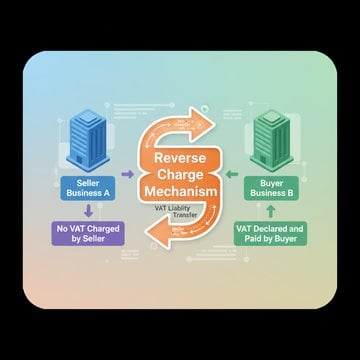
A Belgian supplier billing a client in the Netherlands can still send a regular PDF today, with the usual reverse-charge rules.

Cela change le 1er juillet 2030, quand ViDA imposera que les factures B2B transfrontalières au sein de l'UE soient structurées selon la norme EN 16931 et déclarées quasi en temps réel. D'ici là, la note transfrontalière de chaque ligne du tableau donne la réponse pour le pays concerné : si elle indique « national uniquement », un PDF reste accepté.

Ce que BlueInvoice fait et ne fait pas

BlueInvoice makes PDF invoices and checks VAT numbers; it does not create or send structured e-invoices.

  • Factures PDF avec calcul de la TVA
  • Vérification des numéros de TVA via VIES
  • Structured e-invoices (not yet)
  • Envoi via Peppol ou une plateforme fiscale

Its PDF invoices remain valid for cross-border sales until 2030, and for domestic sales in every country without a live B2B mandate. For e-invoicing compliance where a country requires a structured e-invoice or a clearance platform, send through an e-invoicing provider or your accountant.

Before any cross-border business invoice, check your client's number with the VAT number checker, then create the invoice in the invoice generator.

Questions sur la facturation électronique

ViDA, VAT in the Digital Age, is the EU package adopted on 11 March 2025 that sets common rules for e-invoicing in the EU. It lets member states mandate B2B e-invoicing without asking Brussels for permission, which is why so many national start dates fell in 2025 and 2026. From 1 July 2030, ViDA e-invoicing rules require structured e-invoices to EN 16931 and near real-time reporting for cross-border B2B sales.

La norme européenne qui définit le contenu d'une facture électronique : vendeur, acheteur, lignes, taxes, totaux et conditions de paiement, ainsi que les règles de chaque champ. FatturaPA, XRechnung, ZUGFeRD, Factur-X et la plupart des profils KSeF reposent sur elle : une facture conforme peut donc être lue par n'importe quel système qui prend en charge la norme.

Oui, sous deux noms. Dans les deux cas, il s'agit d'un PDF contenant un fichier XML EN 16931 intégré : une personne peut lire le PDF et un système peut lire les données. L'Allemagne utilise le nom ZUGFeRD, la France Factur-X, et les versions actuelles sont alignées.

Dans la plupart des cas, non. Les obligations nationales couvrent les ventes B2B nationales : un fournisseur d'un pays peut donc encore envoyer un PDF à une entreprise d'un autre pays. Le format structuré deviendra obligatoire pour les ventes B2B transfrontalières le 1er juillet 2030.

Mostly not. Italy and Romania also require e-invoicing for B2C sales: the invoice goes through the national platform, and the consumer still gets a paper or PDF copy. In the other countries in the table, the mandates cover only sales between businesses and to the public sector.

Yes. B2G only means e-invoices are required for sales to the public sector (B2G e-invoicing), not yet between businesses. Some of these countries are consulting on B2B mandates, and many companies there already use Peppol voluntarily.

The UK is outside the EU and outside this table. It has announced mandatory e-invoicing for VAT invoices from April 2029; until then, a PDF invoice with the right VAT treatment works for UK and EU trade in both directions.

Not yet. The BlueInvoice invoice generator creates PDF invoices, which are valid in every country without a live B2B mandate. For countries that require a clearance platform or a structured format, use an e-invoicing provider or your accountant for now.

It shows the status as of November 2026, checked against government pages where available and against tax advisers' published updates. Dates do slip, so confirm with the country's tax authority before relying on a date for a high-value sale.

PDF invoices for sales where a PDF still works

The editor works out the VAT and downloads a PDF, and the VAT number checker confirms your client's number against VIES before you send it.